Sales Funnel or Website? A 10-Minute Test to Pick First

Quick answer: Build a sales funnel first if you sell one main offer and bring traffic from ads, social media or email. Build a standard website first if customers find you on Google, compare options, or need trust before buying. Most small businesses end up with a simple site plus one funnel for the main offer.↗ Share on X
If you sell one main offer and you plan to send paid or social traffic to it, start with a sales funnel. If people need to find you, compare options, and trust you before buying (local services, several products, a company with many pages), start with a standard website. Most small businesses end up needing both, but the order matters: build the one that matches how your customers buy today, and add the other later.
That is the short answer. The rest of this page helps you decide in about ten minutes, with a simple test, a comparison table, and a build plan for each path.
What is the real difference between a funnel and a website?
 Landing Page That Converts: 9 Fixes You Can Do Today →
 How to Choose the Right Domain Name for Your Sales Funnel: Avoid Costly Mistakes →
 How to choose the best funnel builder for small business owners: save money →
A standard website is like a store with many doors. A visitor can land on the home page, a blog post, a service page, or the contact page. They wander around. They read your story, check prices, look at photos, and maybe come back next week. The site works for many goals at once.
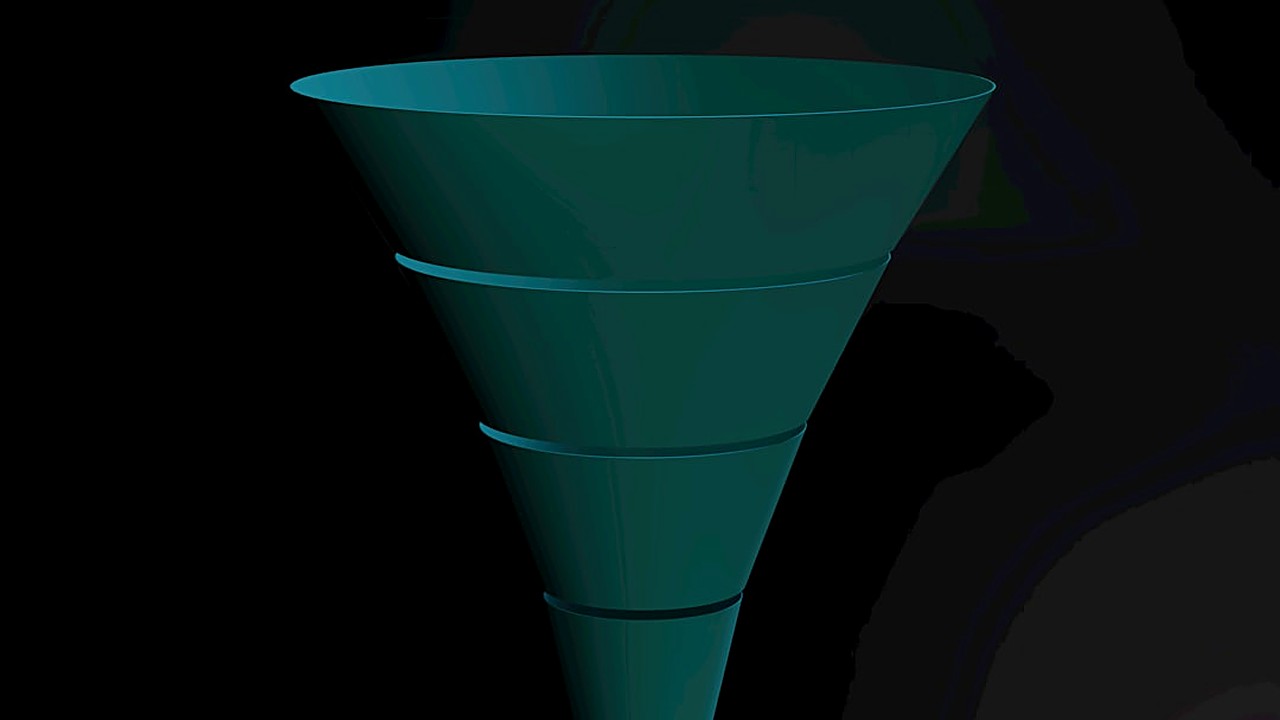
A sales funnel is like a hallway with one door at the end. A visitor lands on one page that talks about one thing. There is one button. That button leads to the next step: a sign-up, an order form, an upsell, a thank-you page. Nothing else on the page competes for attention. No menu, no blog links, no "about us" tour.
A landing page is the first page of a funnel. When people search "landing page vs website difference", this is the core of it: a landing page has a single job, while a website page usually has several.
Smart software picks in your inbox
Which one fits your business? The 5-question test
Answer each question with A or B. Count your answers at the end.
1. How many things do you sell?
A: One main product or one main service package.
B: Several products, services, or price levels.
2. Where will most visitors come from?
A: Ads, Instagram, TikTok, YouTube, email, or a webinar.
B: Google search, word of mouth, maps, or directories.
3. How long do people think before buying?
A: Minutes or a few days. It is an impulse or simple decision.
B: Weeks. They compare quotes and ask questions.
4. What is the first action you want?
A: Buy now, book a call, or join a list.
B: Learn about us, browse, and contact us when ready.
5. Do you need to show up on Google for many different searches?
A: No, I will pay for or create my own traffic.
B: Yes, I want free traffic from many search terms.
Mostly A: build a funnel first.
Mostly B: build a website first.
Mixed (3 vs 2): build a simple website with one funnel attached to your main offer. This is the most common setup for small businesses.
Side-by-side: funnel vs website
 One Clear Call to Action Boosts Landing Page Results →
 Track sales funnel visitors easily without coding skills →
 Free funnel builders to start selling online fast →
| Point | Sales funnel | Standard website |
|---|---|---|
| Main goal | One action (buy, sign up, book) | Many goals (inform, build trust, sell) |
| Number of pages | Usually 2 to 5 | Usually 5 to 30 or more |
| Navigation menu | None or almost none | Full menu |
| Best traffic source | Ads, social media, email | Google search, referrals |
| Time to launch | A weekend for a basic version | One to four weeks for a basic version |
| Search engine value | Low, pages are thin on purpose | High, if you publish useful pages |
| What you measure | Conversion rate per step | Visits, time on page, contact requests |
| Typical tools | Funnel builders with templates | Website builders or WordPress |
When does a sales funnel win?
A funnel wins when you already know who your buyer is and you can bring them to the page yourself. Some clear cases:
- You sell a course, an ebook-style digital product, a coaching package, or a single physical product. One offer means one page with one message.
- You run ads. Paying for clicks and then sending people to a home page full of choices wastes money. A focused page gives the click a better chance.
- You collect emails with a free gift. A checklist, a mini class, or a discount code works best on a page that only asks for the email.
- You do launches or webinars. Registration page, reminder page, replay page, order page. That is a funnel by nature.
A simple funnel has three pages:
1. Opt-in or sales page. Headline, the problem, the solution, proof, and one button.
2. Order or booking page. The form, the price, and what happens next.
3. Thank-you page. Confirms the action and tells the person exactly what to do now (check email, join a group, pick a time).
When does a standard website win?
A website wins when trust and discovery matter more than speed. Some clear cases:
- Local service businesses. Plumbers, clinics, cleaners, and salons get customers from Google and maps. People want to see services, areas served, reviews, and hours.
- Businesses with a catalog. If you sell twenty items, people need categories, search, and filters.
- High-ticket or slow decisions. Someone hiring a contractor or a consultant reads several pages before reaching out. They want to see past work and who you are.
- You want free search traffic. Google needs pages with real content to rank. Funnels are thin on purpose, so they rarely rank for much.
A basic small business website has five pages: Home, Services (or Shop), About, Reviews or Portfolio, and Contact. Add a blog or help section only when you can publish on a regular schedule.
Can you build either one without coding?
Yes. Both paths have no-code tools with drag-and-drop editors. Here is how to pick a tool without getting lost in reviews:
1. Write down the pages you need. For a funnel: opt-in, order, thank-you. For a website: the five pages above.
2. List the must-have features. Payments? Email list? Booking calendar? Blog? Online store?
3. Check that the tool does those things natively, not through three extra add-ons. Every add-on is one more bill and one more thing that can break.
4. Look at the templates. If there is a template close to what you want, you will launch in days, not weeks.
5. Check the price after the free trial and the price when your email list or traffic grows. Some tools charge more as you grow.
6. Make sure you can connect your own domain (yourname.com) on the plan you pick.
What should a funnel page include so it actually converts?
When people search "how to create a landing page that converts", the answer is less about design and more about clarity. Use this order:
1. A headline that names the result. "Fix your leaky faucet in 20 minutes" beats "Welcome to our plumbing course".
2. One line about who it is for. People decide in seconds if the page is for them.
3. The main button above the fold. Visitors should not scroll to find it.
4. Three to five benefits in short bullets. What changes for the buyer, not a list of features.
5. Proof. Real reviews, real photos, real numbers you can back up. Never invent them.
6. The offer details. Price, what is included, how they get it, and refund terms if any.
7. Answers to common doubts. A short FAQ block.
8. The same button again at the bottom.
How do you know which one is working?
Pick numbers before you launch, not after.
For a funnel, track each step:
| Step | What to count | What it tells you |
|---|---|---|
| Landing page | Visitors and button clicks | Is the headline and offer clear? |
| Order page | Visitors and completed orders | Is the price or form scaring people? |
| Thank-you page | Next action taken | Is the follow-up clear? |
If many people click the button but few finish the order, the problem is on the order page (price shock, long form, missing payment option). If few people click at all, fix the headline and the offer first.
For a website, track how people arrive, which pages they read, and how many contact you. A page with lots of visits and no contact requests needs a clearer call to action.
A 14-day plan for each path
If you chose a funnel:
1. Days 1–2: Write the offer in one sentence and list five benefits.
2. Days 3–4: Pick a builder and a template close to your offer.
3. Days 5–7: Write the sales page using the eight-part order above.
4. Day 8: Build the order and thank-you pages. Connect payments and email.
5. Day 9: Test the whole path yourself with a real low-price or free order.
6. Days 10–14: Send a small amount of traffic (your email list, a few posts, or a small ad budget) and read the numbers per step.
If you chose a website:
1. Days 1–2: List your services, prices or price ranges, and service area.
2. Days 3–4: Pick a builder and a template made for your type of business.
3. Days 5–9: Write the five core pages. Add real photos and real reviews.
4. Day 10: Add a contact form, phone link, and map.
5. Day 11: Connect your domain and set up a free business profile on maps.
6. Days 12–14: Ask five happy customers for reviews and fix anything confusing.
Your next step
Take the 5-question test above and write your answers on paper. If you got mostly A, open a funnel builder today and pick a template for your one offer. If you got mostly B, list the five pages of your website and the services that go on each one. Do not try to build both at once. Launch the first one, look at the numbers for two weeks, and only then add the second piece.
FAQ
Is a landing page the same as a sales funnel?
No. A landing page is the first page of a funnel. The funnel is the full path: landing page, order or booking page, and thank-you page, sometimes with an upsell in between.
Can a sales funnel replace my website?
Only if you sell one offer and bring all traffic yourself through ads, social media or email. If people search for you on Google or compare several services, you still need a website.
Which is faster to build without coding?
A basic funnel is usually faster: two or three pages built from a template can go live in a weekend. A basic five-page website usually takes one to four weeks because it needs more content, photos and reviews.
Do funnels rank on Google?
Rarely for many terms. Funnel pages are short and focused on one action on purpose. If you want free search traffic, you need website pages with useful, detailed content.